
How conservation dogs help protect wildlife
A well-trained dog can detect scent and signs that are difficult for people to find.
Two kinds of conservation dog team
Conservation dogs work with trained handlers on very specific targets. In Aotearoa New Zealand, their work broadly falls into two areas: finding introduced pests and locating protected native species.
A dog’s nose can pick up scent trails, scat, nests, dens or the target animal itself. The information the team gathers helps people decide what to do next; the dog is not working independently.
Pest detection dogs
Pest dog teams often use energetic terrier-type dogs. Depending on their certification, they may search for rats, mice, stoats, ferrets, weasels, feral cats, hedgehogs, possums or other introduced species. Some teams are trained for targets such as plague skinks, Argentine ants, wallabies, kauri dieback or invasive plants.
They can help with biosecurity checks, a suspected incursion, surveillance after pest removal, finding dens or identifying places where traps should be positioned.
Protected-species dogs
Protected-species teams often use dogs bred to hunt or point, because they can search methodically and indicate a scent without rushing in. Certified teams work with species including kiwi, takahē, kea, whio, penguins, pāteke, kākāpō, weka, bittern, native lizards, bats and seabirds.
Their work may support population surveys and translocations, locate nests or birds whose transmitters have failed, find injured wildlife, or check an area before forestry or land-clearing work begins.
Training, certification and control
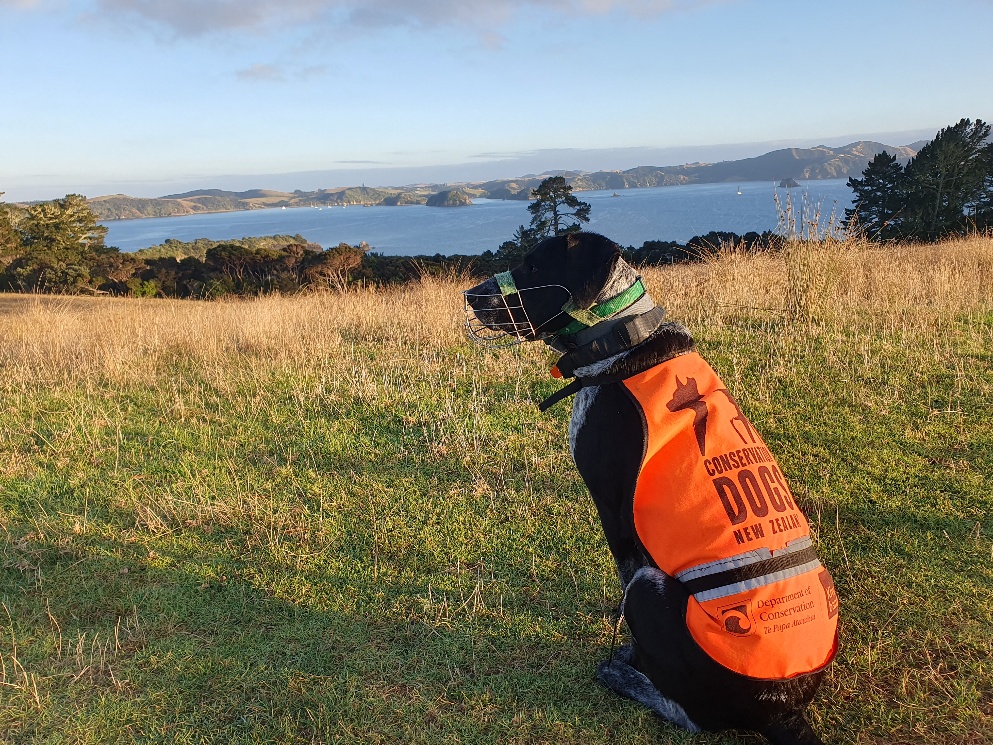
Dog and handler are assessed as a team and certified for a named target. Protected-species dogs work under close control, wear a high-visibility conservation vest and are muzzled around wildlife. Regular assessment and lifelong training are part of keeping the work safe and dependable.
Further reading: DOC Conservation Dog Programme. You can also meet Yagi, our certified kiwi conservation dog.