

Mowing and clearing in kiwi areas
Kiwi do not only live in mature native bush. They may shelter in long grass, scrub, drains, plantation forest and small pockets of vegetation.
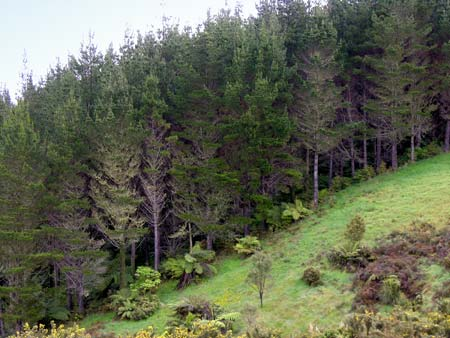
Kiwi do not live only in mature forest
Kiwi may shelter in rank grass, kikuyu, scrub, gorse and pampas as well as native bush and planted forest. A patch that looks untidy or empty can still provide food, cover or a daytime roost.
Before mowing or clearing, ask whether the work is necessary. Retaining useful cover or replacing it with suitable planting may be the safest long-term option.
Reduce the risk when work must go ahead
- Walk the area first and look carefully for signs of kiwi.
- Work in narrow strips or clear the perimeter first, then move inward over successive days so wildlife has a route into suitable cover.
- Make sure there is safe habitat for a kiwi to move towards; simply pushing a bird out of one patch is not enough.
- Use smaller hand-held equipment where practical, because the operator has a better view of the ground ahead.
- Take special care around dense cover, drains, wet margins and possible shelter sites.
- Keep dogs away from the work area and stop if a kiwi, nest or egg is found.
Do not burn vegetation where kiwi may be present. A hidden bird may freeze rather than flee from danger.
For heavy machinery and one-off clearing
If kiwi are known or suspected on a property, contact the Far North Kiwi Protection Team before mulching scrub, clearing a large area or bringing in heavy machinery. Early notice gives time to assess the site and decide whether a search by a certified kiwi conservation dog is appropriate.
The right approach depends on the site, vegetation and planned work. Ask us for local advice before work begins.