

Kiwi in hot, dry summers
Dry ground can make food harder to reach and bring kiwi into places where people do not usually expect them.
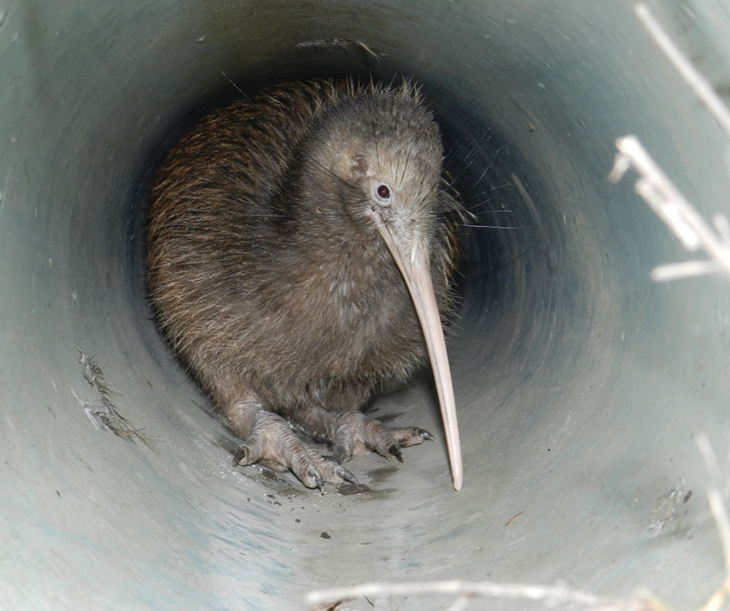
When Northland dries out
After a long spell of hot, dry weather, Northland soils can become hard and the invertebrates kiwi feed on move deeper underground. Kiwi may spend longer searching for food and travel farther than usual, so sightings around dawn, dusk or even during the day can become more common.
A daytime sighting does not automatically mean a bird is injured, but it is worth watching from a distance and noting anything unusual.
Cool, damp places can become important
Kiwi may shelter near drains, culverts, creek banks, waterways and rock crevices where the ground stays cooler. Check these places before moving machinery, clearing vegetation or letting dogs explore.
Water can create another risk. Smooth-sided troughs and ponds may trap a bird that cannot climb out. A secure escape ramp or rough, stable bricks can provide a way out without obstructing the water source.
Take particular care around young kiwi
Young kiwi have shorter, softer bills and less experience finding food or safe shelter. In dry conditions they may turn up in exposed or unexpected places. Keep dogs and people away, do not offer food, and do not chase or attempt to catch the bird.
Putting food out for kiwi can attract rats, mustelids and other predators, creating a greater risk.
If a kiwi needs help
If a bird appears injured, weak or in immediate danger, call DOC on 0800 DOC HOT (0800 362 468) or contact the Far North Kiwi Protection Team. Note the location, time and what you observed. A photograph or short video taken from a safe distance may help the responding team.
When rehabilitation is needed, our dedicated rehabilitation centre near Kerikeri provides specialist care for injured kiwi.
Further reading: Te Tai Tokerau Kiwi Calendar.