

Stoats, weasels and ferrets: a practical guide
Stoats, weasels and ferrets are introduced predators. Knowing the differences can help with reporting and predator-control work.
How to tell them apart
| Animal | Useful field marks | Why it matters |
|---|---|---|
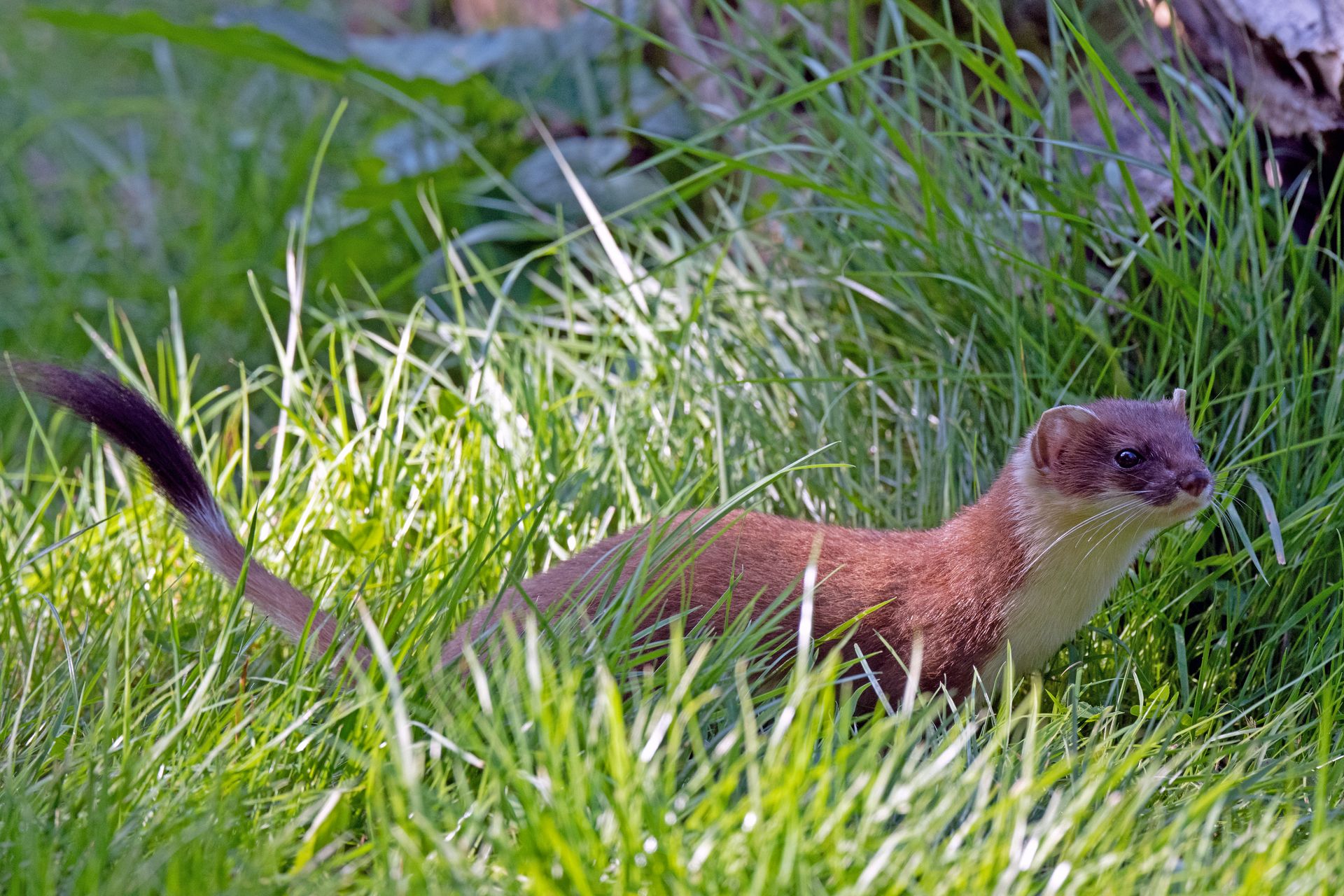
| Stoat | Long, slim body; brown back and pale belly; a relatively long tail ending in a distinct black, bushy tip. | A serious predator of kiwi chicks and many other native animals. Stoats can climb and swim. |
| Weasel | The smallest of the three; slim body and a much shorter tail than a stoat. | Preys on small birds, lizards and invertebrates. Weasels are less widespread than stoats. |
| Ferret | The largest mustelid; usually has a pale body, darker legs and tail, and a noticeable dark face mask. | Large enough to kill adult kiwi as well as other native wildlife. |
Colour and size can vary, and a quick sighting is not always enough for a confident identification. A clear photograph, location and time are useful when reporting an animal.
Field clues beyond size
Stoat
Stoats have a long, cylindrical body with a neat boundary between the darker upper coat and pale underside. The black, bushy tail tip is the most useful field mark. They use farmland, forest, wetlands and coastal habitat, can climb and swim, and may be active by day or night. Their wary behaviour can make them difficult to observe for long.
Weasel
Weasels are the smallest of the three. Their tail is short and lacks the prominent black, bushy tip of a stoat. The line between the brown back and pale underside is often wavy, and brown spotting may be visible on the underparts. They favour thick ground cover and, like stoats, can run, climb and swim. Sightings in New Zealand tend to be patchier.
Ferret
Ferrets are much heavier-bodied, with a pale coat, dark legs and tail, and a distinct dark mask across the face. They are often associated with rough farmland and places where rabbits are common. Ferrets are mainly nocturnal, use burrows and are large enough to threaten adult kiwi.
Record what you see
Colour and size vary, and a quick sighting is not always enough for a confident identification. Note the location, time, habitat, movement and tail markings. A clear photograph is particularly useful.
Effective control depends on selecting suitable tools, placing them well and checking them consistently. If you would like to help with local predator control, contact the team for guidance.
Further reading: DOC’s mustelid identification field guide.